
House Pad Drainage Checklist for East Texas
A house pad can look level, clean, and ready for concrete while still holding the beginning of a drainage problem. In East Texas, heavy rain, clay soils, low spots, and wooded lots can turn a poorly planned pad into standing water, soft ground, washouts, or trouble around the foundation. This house pad drainage checklist helps property owners ask the right questions before construction moves forward.
Good drainage is not an add-on after the pad is built. It is part of building the pad correctly in the first place. The goal is straightforward: keep water moving away from the home, protect the soil that supports it, and make sure rain has somewhere safe to go.
Start With the Whole Property, Not Just the Pad
Drainage starts beyond the building footprint. Before dirt is moved, look at where water enters the property, where it naturally collects, and where it can leave without causing a new problem downhill.
On rural East Texas land, the existing terrain often tells the story. A low area may receive runoff from a neighboring tract, a pasture, a county road ditch, or a higher wooded section of the lot. Clearing trees and brush can also change how rain travels across the ground. What worked when the lot was raw may not work once a driveway, house, shop, and yard are in place.
Walk the property after a good rain if possible. Look for puddles that remain, washed-out soil, muddy tire tracks, creek or ditch overflow, and water marks on fences or trees. Those signs help identify drainage paths that should be respected or redirected during site preparation.
House Pad Drainage Checklist Before Construction
A dependable house pad should be planned around the home, the driveway, the finished yard, and the route water will take during a hard storm. Use this checklist when discussing the project with your builder or excavation contractor:
Confirm the finished floor elevation. The house needs to sit high enough above surrounding ground to allow positive drainage away from the structure. The needed elevation depends on the lot, flood considerations, driveway access, and local building requirements.
Establish positive slope away from the pad. Ground around the house should fall away from the foundation rather than flatten out or slope back toward it. Even a small reverse grade can direct roof runoff and surface water toward the home.
Check the soil below and around the pad. East Texas clay can hold water and become soft when saturated. Organic topsoil, roots, loose debris, and unsuitable material should not remain beneath a pad intended to support a home.
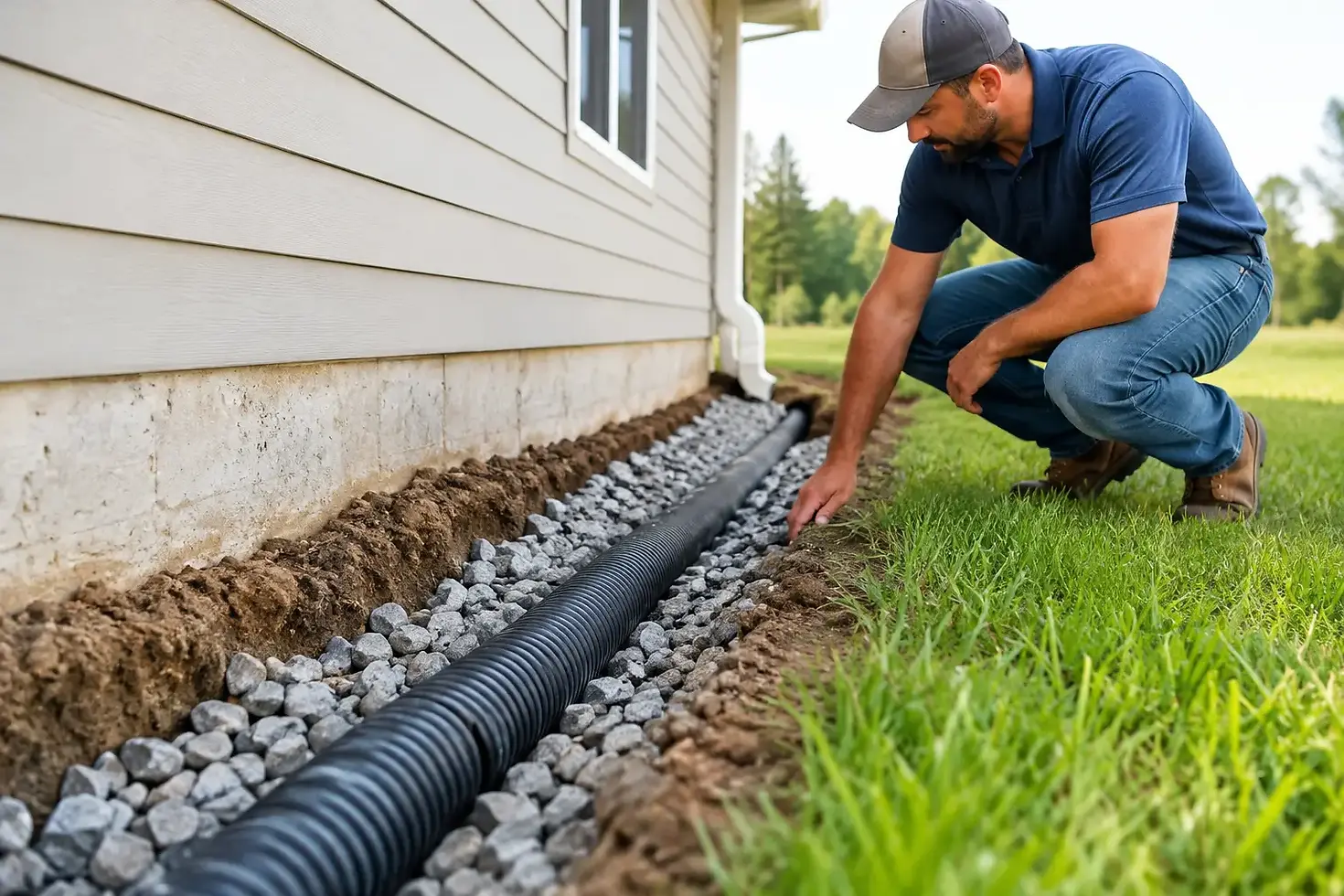
Plan a discharge point for runoff. Swales, ditches, culverts, or other drainage features need a real outlet. A ditch that ends in a low pocket only moves the standing-water problem farther from the house.
Account for roof water. Gutters and downspouts are often installed later, but their discharge should be considered early. Concentrated roof runoff can cut channels into fresh grading or soak the edge of the foundation if it has no planned path.
Coordinate the driveway elevation. A driveway can act like a dam when it is built too high in the wrong place. It may need culverts, side ditches, or careful grading to keep water flowing across the property.
Protect slopes from erosion. Bare soil is vulnerable after clearing and grading, especially during spring storms. Mulch, vegetation, rock, or other erosion-control measures may be needed until the site is stabilized.
Keep utility work in the plan. Septic systems, water lines, electric trenches, and drainage lines can alter grades or disturb compacted soil. Their locations should be considered before final shaping is complete.
Avoid trapping water between improvements. Shops, retaining areas, landscaping borders, and future additions can create pockets that hold water. Leave room for drainage routes as the property develops.
Review the plan after a rain event. If scheduling allows, inspect the rough grade after rainfall and before final landscaping or concrete work. It is much easier to correct a low spot while equipment is still on site.
Why Pad Height Matters
Most drainage problems around homes come down to elevation. If the pad is too low, there is little room to shape the surrounding ground so water drains away. If the pad is raised without considering the rest of the property, water may be pushed toward the driveway, neighboring land, a septic area, or another structure.
There is no one pad height that fits every project. A level lot with good natural fall may need less elevation work than a low, flat tract with clay soil. On the other hand, raising a pad on a rural property may require additional fill, compaction, grading, and a longer transition for the driveway. Those steps add cost, but they can be far less expensive than trying to solve moisture and erosion issues after the house is built.
The right approach is based on the actual land. A contractor should look at existing grades, soil conditions, drainage channels, access, and the planned finished floor elevation before quoting a final scope.
Do Not Treat Compaction and Drainage as Separate Jobs
A properly built pad needs suitable material, controlled placement, and compaction. It also needs water managed around it. These parts of the job work together.
For example, water that ponds along the edge of a pad can saturate nearby soils, soften unprotected areas, and erode fill slopes. Water flowing too fast across a newly graded site can cut ruts that eventually affect the yard, driveway, or drainage ditch. Simply adding more dirt does not fix those issues if the new grade has nowhere to shed water.
This is why site preparation should be viewed as a system. The pad, driveway, drainage features, clearing work, utility locations, and final yard grade all affect one another. A low bid that covers only the square footage beneath the house may leave major site needs unresolved.
Watch for These Warning Signs
Property owners do not need to be excavation experts, but a few warning signs are worth taking seriously. Water standing beside the pad more than a day or two after rain deserves attention. So do fresh erosion channels, muddy ground at the pad edge, a driveway that collects runoff, and drainage ditches that do not carry water to an outlet.
Another common concern is water flowing toward the house from a higher part of the property. In some cases, a shallow swale can intercept and redirect it. In others, the site may need a more detailed drainage solution. The right fix depends on the amount of water, soil type, slope, and available place for discharge.
Be cautious about quick fixes that only hide the symptoms. Spreading gravel over wet ground, filling a puddle without changing the grade, or cutting a ditch that stops short of an outlet can create more work later. A good drainage plan follows the water all the way from where it starts to where it safely exits.
Plan for the Finished Site, Not Just the Build Day
A house pad should work after the foundation is poured, after the driveway is finished, and after the first several hard rains. Think ahead to where vehicles will park, how lawn equipment will move around the home, where gutters will drain, and whether future landscaping could block the intended flow of water.
This matters even more on acreage. A home site may start as one small graded area within a much larger tract, but roads, barns, fencing, ponds, and additional buildings can change drainage over time. Leaving sensible drainage routes open gives the property more flexibility as plans grow.
At DD Services, we prepare land with the full site in mind, not just the dirt directly under the slab. A clear plan, solid grading, and honest communication up front help avoid costly surprises when the weather turns.
Before concrete is scheduled, take one more walk around the pad and ask a simple question: when the next heavy East Texas rain falls, where will every drop go? If the answer is clear, the build is on much better ground.