.png)
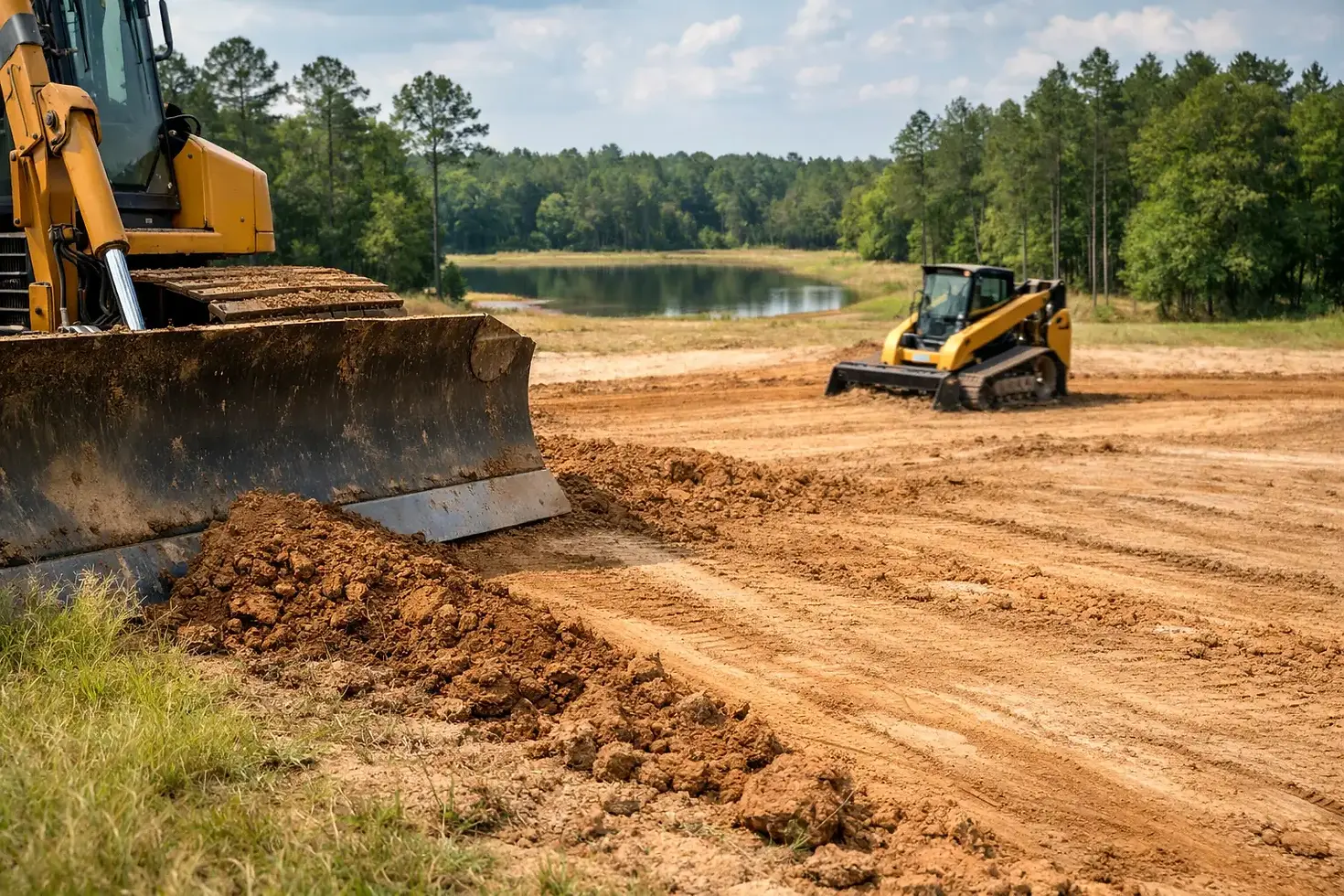
How to Grade Property for East Texas Builds
A property can look level and still send water straight toward a house, barn, shop, or driveway. That is why learning how to grade property starts with more than moving dirt. The goal is to shape the ground so water has somewhere safe to go, vehicles have a dependable surface, and future construction sits on solid, properly prepared soil.
Across East Texas, grading often involves clay soils, rolling ground, heavy rain, existing drainage paths, and wooded acreage that may not have been touched in years. A good plan works with those conditions instead of trying to force the land into a shape that creates new problems later.
How to Grade Property Before You Build
Property grading is the process of adjusting the slope and elevation of land. Sometimes that means cutting high spots down. Other times it means bringing in fill, compacting it in layers, and building the ground up. Most projects require a combination of both.
Before equipment ever starts, walk the property after a rain if possible. Look for standing water, washouts, soft spots, exposed roots, ruts, and low areas where runoff collects. Notice where water comes from and where it naturally leaves the property. Those observations can save a lot of guesswork.
A grading plan should also account for the finished use of the site. A house pad needs different preparation than a ranch road. A commercial building site, pond area, driveway, pasture entrance, or equipment yard each has its own drainage and compaction needs. There is no one slope that works for every property.
Start with the Finished Elevation
The finished elevation is the final height you need for the house pad, building floor, road surface, or yard. It should be high enough to protect the structure from runoff, but not so high that the driveway becomes too steep or water is redirected toward a neighbor's land.
For a home site, the building pad is commonly raised above the surrounding grade. The surrounding soil is then shaped to carry water away from the foundation. The exact height and slope depend on the site, local requirements, soil conditions, and the building design. A surveyor, engineer, builder, or qualified excavation contractor may need to be involved when the project has significant elevation changes or drainage concerns.
Do not base the finished elevation on the highest spot you can see from the road. Base it on drainage, access, the planned structure, and the land around it. A pad that looks impressive but creates a steep driveway or sends runoff downhill into trouble is not a good pad.
Protect Natural Drainage Routes
Water always finds the low point. If you fill a swale, ditch, or natural drainage route without providing another path, the water may back up onto your property or move somewhere it does not belong.
In East Texas, a heavy storm can quickly show whether a grading job was done right. Maintain or improve the way runoff leaves the site. Depending on the property, that may involve shaping shallow swales, maintaining drainage ditches, installing culverts at driveway crossings, or using rock and erosion-control measures where water moves fast.
It is also wise to consider what happens beyond your property line. Grading should not push concentrated runoff onto neighboring land. In some cases, county, city, subdivision, floodplain, or drainage rules may apply. Check requirements before making major changes, especially near creeks, flood-prone areas, public roads, or utility easements.
The Right Way to Grade for Drainage and Stability
Proper grading is a sequence of careful work. Skipping steps may save time at first, but it can lead to settling, muddy access, erosion, or drainage repairs after the build is complete.
A typical site grading process includes these key phases:
Clear brush, trees, stumps, debris, and unsuitable topsoil from the work area.
Strip and stockpile usable topsoil when it can later be used for final landscaping.
Cut high ground and place suitable fill in low areas to reach the planned elevations.
Compact fill in controlled lifts so pads, roads, and working surfaces do not settle unevenly.
Shape drainage routes, finish slopes, and stabilize exposed soil before heavy rainfall causes erosion.
The order matters. You do not want to spread topsoil over a building pad before the pad is built and compacted. You also do not want to cut a driveway through a drainage path without planning for a culvert or other crossing. Good site work looks ahead to the next stage of the project.
Cut, Fill, and Compaction
“Cut” means removing soil from a high area. “Fill” means placing soil to raise a lower area. A balanced site uses cut material as fill when the soil is suitable, which can reduce hauling costs. But not all dirt is good fill. Organic material, roots, loose topsoil, and wet or unstable soils should not be buried beneath a structure or road surface.
Compaction is where many property owners see the difference between a quick dirt job and a dependable site. Fill must be placed and compacted in layers rather than dumped into a deep low spot all at once. Without proper compaction, the ground can settle months or years later. That can leave a driveway uneven, create low spots around a foundation, or cause a pad to lose its intended shape.
The equipment and approach depend on the job. A small landscaping correction may need only light earthwork. A house pad, long ranch road, or commercial site usually calls for heavier equipment, controlled material placement, and more detailed elevation work.
Grade Driveways for Water, Not Just Looks
A new driveway should feel solid under a truck and remain usable after a storm. That means the road surface needs a planned crown or cross slope so water sheds off the driving surface instead of running down tire tracks.
The road also needs a place for that water to go. Side ditches, turnouts, culverts, and stabilized entrances may all be part of the solution. On hilly ground, water can gain speed fast and cut through gravel or soil. On flatter ground, poor drainage can keep the base soft and turn a drive into a muddy mess.
Gravel alone does not fix a weak driveway base. If the subgrade is soft, poorly drained, or full of organic material, the rock may disappear into the soil. Proper grading, drainage, and base preparation come first.
Common Grading Mistakes That Cost More Later
The most expensive grading problems usually begin as small shortcuts. One common mistake is grading everything flat. Flat ground may look clean, but it often leaves water with no clear route away from the building or driving surface.
Another mistake is ignoring topsoil. Good topsoil is valuable for lawns, landscaping, and final finish work, but it is not a stable base for pads and roads. Strip it before construction grading, save what is usable, and bring it back at the appropriate time.
Property owners also sometimes underestimate erosion. Bare dirt on a slope can wash out quickly during a strong East Texas rain. Final grading should include a plan for stabilization, whether that is vegetation, mulch, rock, drainage improvements, or other erosion-control methods suited to the site.
Finally, avoid grading before the full project is understood. If you grade a house site first and decide later where the driveway, septic system, utilities, shop, and drainage will go, you may end up reworking the same ground twice. A basic site layout before work begins helps control cost and keeps the project moving in the right direction.
When to Bring in a Grading Contractor
Minor yard drainage work may be manageable for an experienced property owner with the right equipment. Larger jobs deserve professional planning and operation. Consider calling a contractor when you need a house pad, major cut-and-fill work, a long driveway, drainage corrections, land clearing tied to construction, or erosion control on sloped ground.
A local contractor can assess soil, access, drainage patterns, available material, and the practical realities of getting equipment onto the property. They can also help you decide whether a project needs imported fill, culverts, rock, additional clearing, or a different pad location altogether.
DD Services approaches grading with the full site in mind, not just the first pile of dirt. For East Texas landowners, that means looking at how clearing, pads, roads, drainage, and final site preparation need to work together before the job begins.
A well-graded property does not have to look overbuilt or complicated. It simply needs to keep water moving where it should, provide a firm base for what comes next, and hold up through the weather. Before you build, put the plan on the ground and make sure the dirt is working for you.