.png)
How Much Does Land Clearing Cost in East Texas?
A property can look manageable from the gate, then tell a different story once you walk it. Thick yaupon, mature pines, buried debris, wet ground, old fence, and uneven terrain can all change the work involved. If you are asking, how much does land clearing cost, the honest answer is that it depends on what is growing, what needs to stay, and what you want the land ready for when the equipment leaves.
For East Texas property owners, land clearing is not just about making brush disappear. It is often the first step toward a homesite, ranch road, pasture improvement, driveway, fence line, or commercial pad. The right scope protects your budget and keeps the next phase of the project from becoming more expensive.
How Much Does Land Clearing Cost?
Most land clearing projects are priced by the acre, by the square foot for smaller lots, or as a complete project based on equipment time, labor, hauling, and disposal. In East Texas, a light brush-clearing job may start around $1,500 to $3,000 per acre. Moderate brush and small trees often fall in the $3,000 to $6,000 per acre range. Heavily wooded land with large trees, stumps, rock, difficult access, or demolition debris can run $6,000 to $12,000 or more per acre.
Those are planning ranges, not a promise that every acre costs the same. A clean, flat acre with young growth is far different from an acre of mature hardwoods and tangled underbrush. A half-acre homesite may also cost more per acre than a 20-acre ranch project because moving equipment, setting up, and hauling material still take time.
For small residential jobs, contractors may quote a flat project price instead. Clearing a backyard expansion, driveway route, or house pad area could range from a few thousand dollars upward depending on the vegetation, access, and finish needed. The best number comes after someone walks the property and understands your actual goal.
What Drives the Cost of Clearing Land?
The size of the property matters, but it is rarely the only thing that matters. Land clearing is physical work, and the price reflects the amount of material that must be cut, moved, mulched, hauled, or disposed of safely.
Vegetation Density and Tree Size
Brush is faster to clear than timber. Thick brush can still take time when it is tangled with vines, fallen limbs, and small saplings, but large trees require more planning, heavier equipment, and a safe removal method. Stumps and root balls add another layer of work, especially when the land will be built on or graded afterward.
A property with scattered trees you want to preserve requires careful clearing around those trees. That can cost more than clearing everything in a designated area, but it is often worth it when shade, privacy, and the character of the property matter to you.
The Condition of the Ground
East Texas land can change quickly from firm, workable soil to soft or wet ground. Slopes, drainage paths, creek areas, exposed roots, rock, and erosion-prone soil can slow production and affect equipment choices.
If equipment has to work around wet conditions or travel a long distance from the road to the clearing area, expect that to affect the quote. Good contractors account for these realities up front instead of giving a low number that grows once work begins.
Access to the Site
Can trucks and machinery get to the work area without crossing a ditch, narrow gate, weak culvert, or soft pasture? Is there enough room to load debris or stage equipment? Access is a major cost factor on rural properties.
A tract may have plenty of acreage but limited entry points. Sometimes a temporary access route, culvert improvement, or careful route planning is needed before clearing can begin. That is not wasted work. It helps prevent torn-up ground, unnecessary delays, and damage to areas you want to keep intact.
Disposal and Cleanup
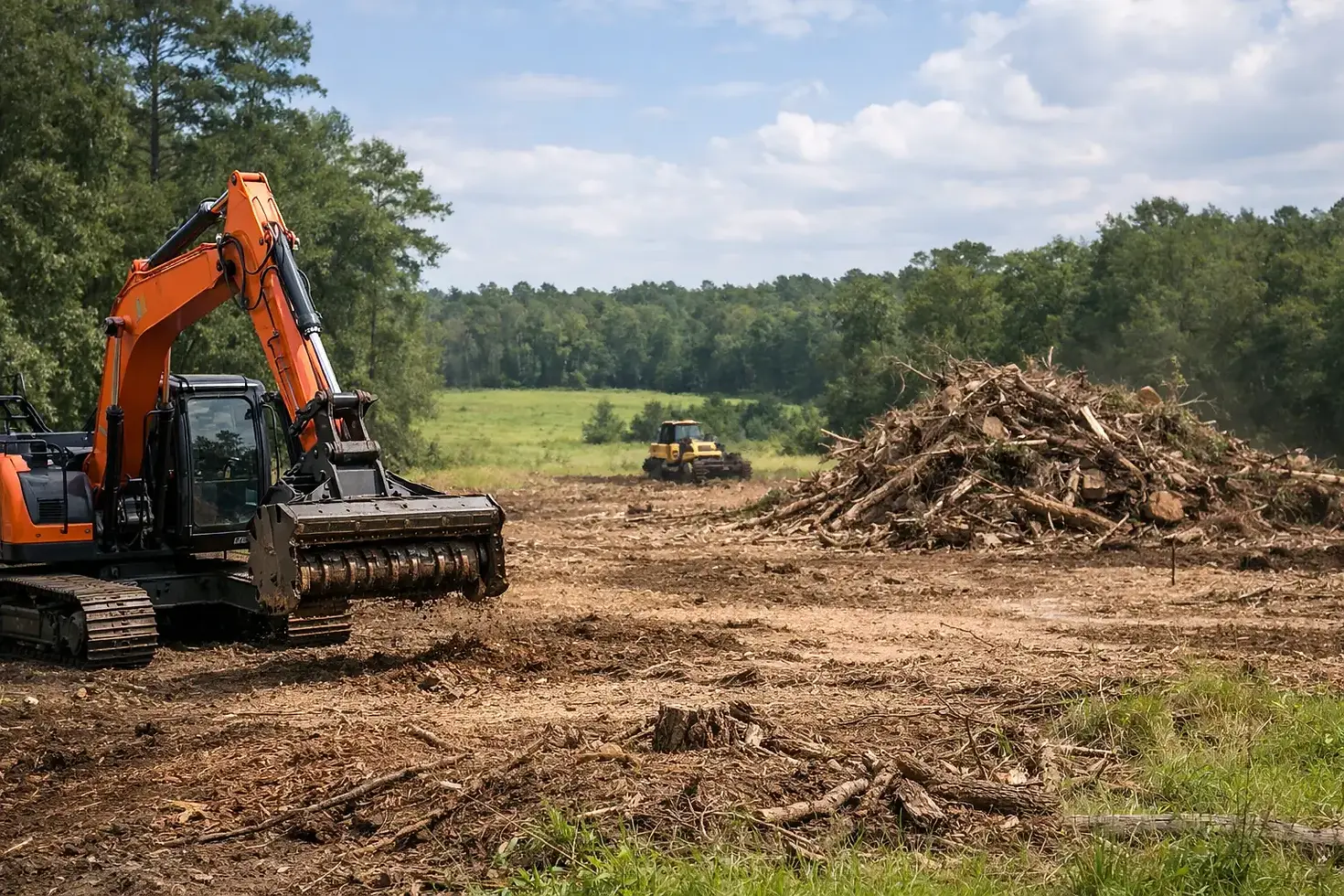
What happens to the material after it is cut is one of the biggest differences between clearing quotes. Some jobs are handled with forestry mulching, which processes brush and smaller trees into mulch that stays on the ground. Other jobs involve piling, hauling, burning where permitted, or removing debris from the site.
Mulching can be an efficient option for brush management, trail clearing, fence lines, and many ranch properties. It reduces hauling and leaves a layer of organic material that can help limit erosion. It is not always the right choice, though. If you need a clean building footprint, full stump removal, final grading, or a smooth finished lawn area, additional excavation and cleanup may be necessary.
Your End Use for the Property
A cleared lot and a build-ready site are not the same thing. Clearing vegetation may be only the first step before grading, drainage work, house pad construction, driveway installation, or erosion control.
For example, a ranch owner opening up overgrown pasture may only need brush removed and selected trees left standing. A homeowner preparing for new construction may need trees removed, stumps excavated, debris hauled away, rough grading completed, and a house pad built to the proper elevation. The second project costs more because it includes more than land clearing, but it can save time and coordination later.
Common Land Clearing Methods and Their Trade-Offs
There is no one-size-fits-all way to clear land. The right method should match the vegetation, the site conditions, and what comes next.
Forestry mulching is often a good fit for dense brush, cedars, small trees, trails, and fence lines. It is usually faster and less disruptive than traditional clearing because material is processed on site. The trade-off is that larger stumps and heavy timber may still need separate removal if you are preparing for construction.
Traditional mechanical clearing uses equipment to push, cut, dig, and remove trees and stumps. This approach is often necessary for building sites, large tree removal, pond areas, and projects requiring a more complete finish. It creates more material to manage, but it gives you a cleaner starting point for grading and development.
Selective clearing takes more care. Instead of removing everything, the crew clears undergrowth and problem trees while protecting the trees and natural features you want to keep. It can make a property more usable without making it look stripped bare.
Costs That May Be Separate From the Clearing Price
When comparing estimates, make sure you are comparing the same scope of work. One quote may cover cutting and mulching only, while another includes stump removal, hauling, grading, and site cleanup.
Ask whether the estimate includes these items if they apply to your project:
Stump grinding or full stump and root removal
Hauling, disposal, or on-site debris management
Rough grading, finish grading, or drainage improvements
Driveway, culvert, house pad, or erosion-control work
A lower price is not always a better deal if it leaves behind stumps, piles, drainage problems, or a site that is not ready for the work you planned next. Clear scope protects both sides of the job.
How to Get a More Accurate Land Clearing Estimate
Before requesting an estimate, think through the result you want. Mark the approximate area, identify trees or features you want preserved, and explain whether the cleared land is for a home, road, pasture, pond, fence line, or future development. Photos can help with an initial conversation, but an on-site visit is the best way to evaluate access, ground conditions, and the true density of the growth.
It also helps to be upfront about your budget. A good contractor can often explain practical options, such as clearing the homesite and driveway first, then addressing the remaining acreage in phases. That approach can make a large project more manageable without cutting corners where proper site preparation matters most.
At DD Services, we believe a land clearing estimate should be straightforward. You should know what is being cleared, how the material will be handled, what equipment work is included, and whether the site will be ready for the next step. That is how we prepare your land like it is our own.
A fair price starts with a clear plan, not a guess from the roadside. Walk the property with an experienced local crew, talk through what you want to build or improve, and get a free estimate that fits the real work in front of you.